Pay-per-click advertising has become essential for businesses, wanting to reach customers online quickly and measurably. While organic search and content marketing build long-term visibility, PPC delivers immediate traffic and leads. But with advertising budgets always limited, choosing where to invest those dollars requires understanding which platforms deliver the best returns for your specific business.
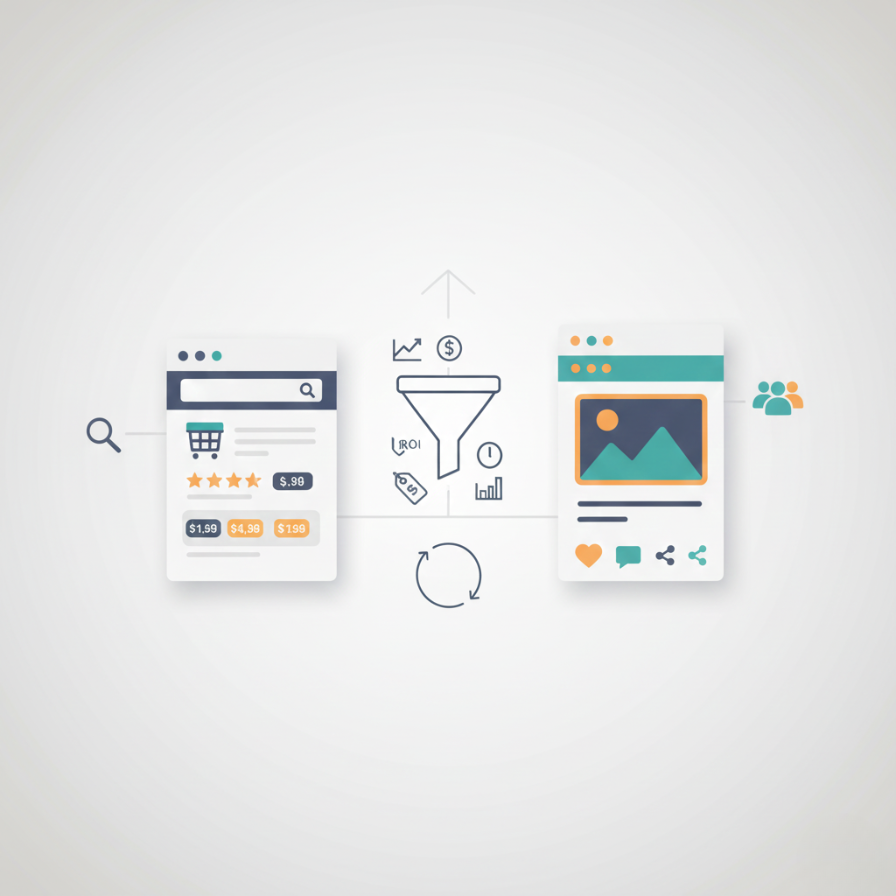
Google Ads and Facebook Ads dominate digital advertising, collectively accounting for the majority of digital ad spending worldwide. Both platforms offer powerful targeting, measurement, and optimization capabilities, yet they work fundamentally differently and excel in different scenarios.
Google Ads targets users actively searching for solutions, products, or information. When someone searches “emergency plumber near me” or “best project management software,” Google Ads lets you appear at that exact moment of high intent. This search-based advertising captures demand that already exists.
Facebook Ads targets users based on demographics, interests, and behaviors while they’re scrolling through social feeds. Rather than responding to active searches, Facebook Ads interrupts attention to create demand or awareness. This social advertising introduces products and services to users who might not be actively searching but fit your ideal customer profile.
After managing hundreds of PPC campaigns across both platforms for businesses in various industries, we’ve developed clear understanding of when each platform excels, what trade-offs each involves, and how to determine which deserves your advertising investment or whether using both strategically provides optimal results.
Understanding Google Ads Fundamentals
Google Ads (formerly Google AdWords) is the world’s largest search advertising platform, showing ads to users searching on Google, YouTube, and millions of partner websites through the Google Display Network.
Search advertising represents Google Ads’ core product. When users search relevant keywords, text ads appear above or below organic search results. Advertisers bid on keywords, and Google’s auction system determines which ads show based on bids and quality scores measuring ad relevance and landing page experience.
Shopping ads display product images, prices, and store names directly in search results for product searches. These visual ads are essential for e-commerce businesses wanting to showcase products prominently.
Display advertising shows image and video ads across Google’s extensive network of partner websites. Display ads work differently than search ads they’re more interruptive, appearing as users browse content rather than search actively.
YouTube advertising places video ads before, during, or alongside YouTube videos. Given YouTube’s massive audience, video ads reach users consuming content in various formats: skippable pre-roll ads, non-skippable ads, display ads on YouTube pages.
Remarketing targets users who previously visited your website, keeping your business visible as they continue browsing the web. Remarketing converts significantly better than cold advertising because users already have familiarity with your business.
Intent-driven targeting is Google Ads’ fundamental strength. Users searching keywords signal what they want right now. Someone searching “buy running shoes” or “emergency dentist” has immediate intent that your ads can capture.
Keyword-based targeting lets you specify exactly which searches trigger your ads. Broad match shows ads for related searches; phrase match requires specific phrases; exact match shows ads only for exact keywords. This control lets you target precisely or broadly depending on strategy.
Auction system determines ad placement based on bids and Quality Score (Google’s measure of ad relevance, landing page experience, and expected click-through rate). High Quality Scores can outrank higher bids, rewarding relevant, well-optimized ads.
Google Ads excels at capturing existing demand appearing when potential customers actively search for solutions you provide.
Understanding Facebook Ads Fundamentals
Facebook Ads encompasses advertising across Facebook, Instagram, Messenger, and Audience Network (partner apps and websites). With billions of active users, Facebook offers unparalleled reach and targeting sophistication.
News Feed ads appear in users’ Facebook and Instagram feeds as they scroll, blending with organic content. These native placements achieve higher engagement than traditional banner ads because they integrate naturally into user experiences.
Stories ads appear in full-screen format between users’ stories on Facebook and Instagram. Stories’ popularity makes these placements valuable for visual, mobile-optimized advertising.
Audience targeting is Facebook’s core strength. Rather than targeting keywords, you target people based on demographics (age, gender, location, language), interests (topics users engage with), behaviors (purchase history, device usage), and custom audiences.
Lookalike audiences find new users similar to your existing customers by analyzing characteristics of your customer list and finding Facebook users sharing similar profiles. This powerful feature scales customer acquisition by finding prospects resembling your best customers.
Custom audiences target specific groups: people who visited your website, engaged with your Facebook page, provided email addresses, or interacted with your content. Custom audiences enable precise retargeting and segmentation.
Pixel tracking through Facebook Pixel installed on your website tracks user actions, enabling conversion tracking, remarketing, and optimization toward specific goals like purchases or sign-ups.
Visual creative is essential for Facebook Ads. Unlike text-focused Google search ads, Facebook requires compelling images or videos that capture attention in crowded feeds. Creative quality significantly impacts campaign performance.
Interest-based targeting reaches users who might not be actively shopping but fit your ideal customer profile. Someone interested in marathon running, healthy cooking, and outdoor activities might be perfect for athletic apparel even if they’re not currently searching for running shoes.
Facebook Ads excels at creating demand introducing products and building awareness among audiences matching your ideal customer profiles whether they’re actively shopping or not.
Cost Comparison: CPC, CPM, and ROI
Understanding cost structures helps set realistic budget expectations and compare platforms fairly.
Cost per click (CPC) varies dramatically by industry and competition. Google Ads search CPCs typically range from $1-$2 for less competitive keywords to $50+ for highly competitive keywords in industries like legal services or insurance. Facebook Ads CPCs generally range from $0.50-$3.00 depending on targeting and creative.
However, comparing CPCs alone misleads because click value differs. A $5 Google Ads click from someone searching “buy your product” might convert better than a $0.75 Facebook click from someone scrolling feeds.
Cost per thousand impressions (CPM) favors Facebook Ads significantly. Facebook CPMs typically range $5-$15 per thousand impressions, making it cost-effective for awareness campaigns. Google Display Network CPMs run higher, though still reasonable for display advertising.
Conversion rates typically favor Google Ads for direct response campaigns because users have higher intent. E-commerce conversion rates on Google search often reach 2-5%, while Facebook conversion rates typically run 0.5-2%. However, Facebook’s lower costs can make its total cost per acquisition competitive despite lower conversion rates.
Industry variations are substantial. B2B services often find Google Ads more effective because business buyers actively search for solutions. Consumer products often succeed on Facebook where visual presentation and impulse buying drive conversions.
Customer lifetime value considerations affect ROI calculation. If Facebook customers have higher lifetime values despite higher acquisition costs, Facebook might win long-term even if immediate ROI favors Google.
Attribution complexity exists because users often interact with both platforms before converting. Someone might discover your brand through Facebook, later search your brand name on Google, and convert from that Google ad. Which platform deserves credit? Multi-touch attribution provides fairer credit allocation but requires sophisticated tracking.
Working with experienced PPC services helps optimize spending across platforms based on your specific metrics and goals rather than general industry averages.
When Google Ads Outperforms Facebook
Specific business types and scenarios strongly favor Google Ads over Facebook.
High-intent services where customers actively search for solutions perform exceptionally well on Google. Emergency services (plumbers, locksmiths, towing), medical services (dentists, urgent care), professional services (lawyers, accountants), and home services (contractors, electricians) all benefit from appearing when customers search actively.
When someone searches “emergency plumber Brooklyn,” they need service immediately. Your Google Ad capturing that moment delivers highly qualified leads. Facebook users scrolling feeds aren’t in emergency mode.
B2B services often succeed better on Google because business buyers research solutions actively. Someone searching “enterprise CRM software” or “commercial insurance” signals buying intent Facebook scrolling doesn’t capture.
Local businesses with immediate needs benefit from Google’s location targeting and “near me” searches. Local pack placements and Google Maps integration make Google dominant for local service discovery.
Complex or expensive products requiring research work well on Google because searchers are already in research mode. Someone searching “best DSLR camera 2025” is actively comparing options your informational content and ads can guide their decision.
Niche products or services with clear search intent but limited audience size might struggle on Facebook where building awareness requires scale. Google lets you target very specific keywords capturing exactly the niche audience searching for what you offer.
Long sales cycles with multiple touchpoints throughout research processes benefit from Google’s ability to appear repeatedly as prospects research at different stages, searching different keywords as their understanding deepens.
Brand searches perform extremely well on Google. After awareness campaigns (possibly on Facebook), users searching your brand name are high-intent and should see your ads ensuring they reach your site rather than competitors.
When Facebook Ads Outperforms Google
Different scenarios strongly favor Facebook Ads over Google.
Visual products like fashion, home decor, food, beauty, or lifestyle products benefit enormously from Facebook’s image and video capabilities. Showing products in use or styled attractively drives impulse purchases that text ads struggle to inspire.
Impulse purchases for products people don’t actively search for but might buy when presented attractively work well on Facebook. Someone might not search “funny coffee mugs” but might buy one immediately seeing it in their feed.
New products or innovative solutions that people don’t know to search for require awareness campaigns creating demand. Facebook excels at introducing new products to relevant audiences who wouldn’t know to search because the product didn’t exist in their awareness.
Brand awareness campaigns building familiarity before purchase consideration work better on Facebook where you control message timing and frequency rather than waiting for searches that might never happen.
Broad audience targeting when you know demographic and interest profiles of ideal customers but they’re not actively searching works better on Facebook. Target “women aged 25-40 interested in yoga and wellness” even if they’re not currently shopping.
Engagement campaigns building community, generating content shares, or driving interactions succeed on Facebook’s social platform more naturally than Google’s search-focused environment.
App installs benefit from Facebook’s streamlined mobile app install campaigns optimized specifically for driving downloads. While Google offers app campaigns, Facebook’s mobile-native platform often performs better.
Lower-cost products under $50 often work better on Facebook where impulse buying and visual presentation drive purchases without extensive research. Higher-cost purchases typically require more consideration that search-based advertising supports better.
Retargeting works exceptionally well on Facebook. After users visit your site, Facebook remarketing can stay visible across Facebook and Instagram, reminding users to return and complete purchases.
Targeting Capabilities Compared
How you target audiences differs fundamentally between platforms, affecting who sees your ads.
Google Ads keyword targeting reaches users based on what they search, directly capturing intent. This targeting is powerful but limited to people actively searching. If customers don’t search keywords you’re bidding on, you never reach them.
Keyword targeting requires understanding customer search behavior what terms they use, which questions they ask, how they describe problems you solve. Getting keywords wrong means missing your audience.
Facebook demographic targeting reaches specific ages, genders, locations, languages, education levels, job titles, and life events. This demographic precision lets you reach very specific audience segments say, college-educated women aged 28-35 living in major cities.
Facebook interest targeting reaches users based on pages they like, content they engage with, and activities Facebook infers from behavior. Target users interested in “entrepreneurship,” “organic cooking,” or “marathon running” based on demonstrated interests.
Facebook behavioral targeting reaches users based on purchase behaviors, device usage, travel patterns, and other activities. Target “frequent travelers,” “online shoppers,” or “technology early adopters” based on behaviors Facebook observes.
Custom audience precision on Facebook lets you upload customer lists, website visitors, or app users, targeting these specific groups with tailored messages. Google offers similar remarketing but Facebook’s implementation and integration is generally superior for most businesses.
Lookalike audience scaling on Facebook finds new prospects similar to your existing customers powerful capability Google doesn’t match. This feature scales customer acquisition automatically by finding users resembling your best customers.
In-market audiences on Google target users actively researching or intending to purchase specific products or services based on their search and browsing behavior. This targeting captures users at various research stages beyond just keyword searches.
Audience layering on both platforms lets you combine targeting criteria for precision. On Google, layer keywords with demographics and in-market audiences. On Facebook, combine demographics with interests and behaviors for hyper-targeted segments.
Creative Requirements and Best Practices
What works creatively differs dramatically between platforms due to their different natures and user contexts.
Google Search Ad creative is primarily text: headlines (30 characters each), descriptions (90 characters each), and display URLs. Writing compelling search ads requires concisely communicating value propositions, including calls-to-action, and incorporating keywords for relevance.
Extensions enhance search ads: sitelinks (additional links), callouts (key benefits), structured snippets (specific features), call extensions (phone numbers), location extensions (addresses). Using all relevant extensions improves ad performance substantially.
Google Display and Shopping creative requires images. Display ads use static or animated images with text overlays. Shopping ads automatically pull product images from your feed high-quality product photography directly impacts performance.
Facebook Ad creative is primarily visual: images or videos grabbing attention in feeds. Text accompanies visuals but images drive engagement. Creative quality affects Facebook campaign performance more than any other factor.
High-performing Facebook creative typically features: bright, eye-catching visuals; clear focal points; minimal text on images (Facebook penalizes text-heavy images); authentic, relatable photography rather than overly polished stock photos; video showcasing products in use.
Facebook video ads outperform static images significantly for most businesses. Short videos (15-30 seconds) demonstrating products, showing results, or telling stories capture attention and convey information efficiently.
Ad copy differences: Google search ads need to match search intent directly if someone searches “best running shoes for flat feet,” your ad should address that specific need. Facebook ads need to create interest and desire users aren’t searching for your product, so ads must make them care.
Testing creative is essential for both platforms but especially critical for Facebook where creative fatigue occurs audiences tire of seeing same ads repeatedly. Regularly test new creative keeping campaigns fresh and performance strong.
Mobile optimization matters critically for both platforms but especially Facebook where the vast majority of usage is mobile. Creative must work perfectly on small screens readable text, clear visuals, simplified CTAs.
Campaign Types and Objectives
Both platforms offer various campaign types optimized for different business goals.
Google Search campaigns target keyword searches, driving website traffic, leads, or sales from high-intent searchers. These campaigns work for nearly any business but excel for services and products people actively search for.
Google Shopping campaigns showcase products with images, prices, and ratings directly in search results. Essential for e-commerce businesses competing for product searches.
Google Display campaigns show banner ads across millions of websites reaching users browsing content. These campaigns build awareness, support remarketing, or drive consideration at lower costs than search.
Google Video campaigns place ads on YouTube reaching users consuming video content. Video campaigns build awareness, demonstrate products, or tell brand stories through engaging video content.
Facebook awareness campaigns optimize for reach and impressions, efficiently building familiarity with brands, products, or messages across large audiences.
Facebook consideration campaigns optimize for traffic, engagement, app installs, video views, lead generation, or messages. These mid-funnel campaigns move audiences from awareness toward conversion.
Facebook conversion campaigns optimize specifically for website conversions, catalog sales, or store visits. These direct-response campaigns focus on driving measurable business results.
Campaign objectives should align with business goals. Don’t run awareness campaigns if you need immediate sales, and don’t run conversion campaigns if audiences aren’t familiar with your brand. Match campaign types to where prospects are in buying journeys.
Tracking and Measurement
Understanding what’s working requires robust tracking and analysis on both platforms.
Google Ads conversion tracking records actions users take after clicking ads: purchases, form submissions, phone calls, page views. Implementing conversion tracking through Google Ads tags or Google Analytics ensures you know which campaigns, keywords, and ads drive results.
Google Analytics integration provides deeper insights beyond Google Ads native reporting: user behavior after clicking ads, content engagement, path to conversion, multi-session attribution.
Facebook Pixel tracks website actions after users click Facebook ads, enabling conversion tracking, remarketing, and campaign optimization. Pixel implementation is essential for meaningful Facebook advertising.
Facebook Conversion API supplements Pixel with server-side tracking improving accuracy in privacy-focused environments where browser tracking faces limitations. For serious advertisers, implementing both Pixel and Conversion API ensures complete tracking.
Attribution challenges exist because customers rarely convert on first interaction. Someone might see your Facebook ad, later search your brand on Google, visit from organic search, then convert from remarketing ad. Which source deserves credit?
Multi-touch attribution models distribute credit across touchpoints based on various rules: first-touch (first interaction gets credit), last-touch (last interaction gets credit), linear (equal credit), time-decay (more recent interactions get more credit), data-driven (algorithmic credit allocation).
Return on ad spend (ROAS) measures revenue generated per dollar spent. Target ROAS varies by business model and margins. E-commerce might target 3-4x ROAS (earning $3-4 for every $1 spent). High-margin services might work profitably with 1.5-2x ROAS.
Cost per acquisition (CPA) measures cost to acquire customer or lead. Target CPAs depend on customer lifetime value if average customers are worth $500, you might profitably acquire them for $100 but not $250.
Assisted conversions show how campaigns contribute to conversions even when they’re not the final touchpoint. Facebook might introduce customers who later convert from Google searches understanding these assists prevents undervaluing awareness channels.
Working with PPC management services ensures tracking is implemented correctly and data informs optimization decisions rather than vanity metrics.
Budget Allocation Strategy
With limited budgets, determining how much to invest in each platform requires strategic thinking.
Start with testing budget if you’re new to both platforms. Allocate smaller budgets testing both platforms before committing significant spending. Testing provides data about what works for your specific business rather than relying on general advice.
Industry benchmarks provide starting points but shouldn’t dictate strategy. Your business, offers, and execution affect results more than industry averages. Use benchmarks for context but optimize based on your actual data.
Funnel-based allocation considers where platforms fit in marketing funnels. Facebook often works well for awareness and consideration (top and middle funnel). Google captures intent (bottom funnel). Allocating budgets supporting entire funnels rather than just bottom-funnel conversions often produces better results.
Seasonal adjustments shift budgets based on seasonality. Retail businesses might allocate heavily to Google Shopping during holiday seasons when purchase intent is highest. B2B businesses might maintain steadier allocation year-round.
Performance-based reallocation shifts budgets toward better-performing platforms, campaigns, and ad sets based on actual results. Start with equal or hypothesis-based allocation, then optimize based on data.
Minimum effective budgets exist for both platforms. Google Ads in competitive industries might need $1,000+ monthly for meaningful results. Facebook campaigns often succeed with smaller budgets but need enough to exit learning phases ($50-100+ daily per campaign).
Testing budget segregation separates testing budget from scaling budget. Allocate 10-20% of budget testing new campaigns, audiences, and creative. Allocate 80-90% scaling what’s proven to work.
Lifecycle-based allocation considers that new businesses often need awareness (favoring Facebook), while established businesses capturing existing demand (favoring Google) might allocate differently.
Integration Strategy: Using Both Platforms Together
Many businesses succeed using both platforms strategically rather than choosing one exclusively.
Full-funnel coverage uses Facebook for awareness and consideration, Google for capturing intent. Users discover your brand through Facebook ads, later search your brand or product categories on Google where your ads convert them.
This integrated approach recognizes that customers rarely convert immediately. Building awareness precedes searches, and both platforms play distinct roles in conversion paths.
Remarketing integration targets website visitors across both platforms keeping your brand visible throughout consideration processes. Someone who visits from Google search sees Facebook remarketing ads, or vice versa, increasing overall conversion rates.
Search demand validation through Facebook campaigns creates search volume for your brand. After Facebook awareness campaigns, track branded search volume increases on Google evidence that awareness is working. Then capture that created demand with Google branded search campaigns.
Lookalike audience seeding uses Google Search conversion data to build Facebook lookalike audiences. Export customer lists from Google Ads conversions, upload to Facebook, create lookalikes resembling those converting from high-intent searches.
Creative testing insights transfer between platforms. Messaging that resonates on Facebook often works for Google display ads. Landing page insights from Google campaigns improve Facebook conversion rates.
Budget flexibility across platforms adapts to performance fluctuations. When Google CPCs spike due to competition, shift budget toward Facebook temporarily. When Facebook auction dynamics worsen, allocate more to Google.
Sequential messaging delivers different messages based on where users are in journeys. Facebook introduces problems and solutions broadly. Google search ads address specific needs users search for. Remarketing delivers promotional messages encouraging conversion.
Common Mistakes to Avoid
Understanding common pitfalls helps you avoid wasting budget on preventable mistakes.
Choosing platforms based on preference rather than business fit wastes money. Use platforms that match your business model and customer behavior, not platforms you personally prefer or that seem trendy.
Insufficient tracking prevents understanding what’s working. Without proper conversion tracking, you’re flying blind spending money without knowing results.
Ignoring quality scores and relevance on Google wastes money. Low Quality Scores increase costs while decreasing visibility. Optimize landing pages and ad relevance rather than just increasing bids.
Creative fatigue on Facebook kills campaign performance. Audiences tire of seeing the same ads repeatedly. Refresh creative regularly keeping campaigns performing.
Broad targeting without testing wastes budget reaching irrelevant audiences. Start specific, test performance, then expand cautiously based on results.
Neglecting negative keywords on Google shows ads for irrelevant searches wasting clicks. Build comprehensive negative keyword lists preventing wasted spending.
Stopping campaigns prematurely before gathering sufficient data leads to wrong conclusions. Give campaigns time to exit learning phases and gather meaningful data.
Optimizing for wrong metrics focuses on vanity metrics rather than business results. Track conversions and ROI, not just clicks or impressions.
Ignoring mobile experience when most traffic is mobile kills conversion rates. Optimize landing pages and creative specifically for mobile users.
Set-and-forget approach to campaign management wastes money. PPC requires ongoing optimization, testing, and adjustment based on performance data.
Making Your Decision: Evaluation Framework
Systematic evaluation helps determine which platform deserves your initial or primary investment.
Define clear goals before choosing platforms. Are you building awareness, generating leads, driving sales, or promoting specific products? Goals guide platform selection.
Understand your customer journey. Where do customers typically discover solutions? What research process do they follow? Which platform best intercepts that journey?
Evaluate search volume for your keywords. If nobody searches what you offer, Google might struggle. If search volume is substantial, Google likely converts well.
Assess visual appeal of your products or services. Visually compelling products that photograph well favor Facebook. Services or complex products might favor Google’s text-based format.
Consider budget constraints. Can you afford minimum effective budgets for both platforms, or should you focus resources on one for stronger results?
Analyze competitor behavior. What platforms do successful competitors use? Their spending patterns often indicate what works in your industry.
Test both if possible. If budget allows, test both platforms with meaningful budgets providing actual performance data for your specific business rather than relying on assumptions.
Consult with experts experienced in both platforms who can provide objective guidance. Our PPC services include platform selection guidance based on business-specific factors.
Moving Forward with PPC Strategy
Google Ads and Facebook Ads are both powerful platforms delivering excellent results when used appropriately for the right business goals and customer contexts. Neither platform is universally better superiority depends on your specific business, products, customers, and objectives.
For many businesses, the answer isn’t choosing one platform exclusively but rather using both strategically, leveraging each platform’s unique strengths. Google Ads captures existing demand from high-intent searchers. Facebook Ads creates demand building awareness among relevant audiences who might not be actively searching.
Success with either platform requires more than just choosing correctly it requires skilled campaign setup, ongoing optimization, creative testing, proper tracking, and strategic budget allocation. The platform choice matters, but execution quality matters more.
Whether you choose Google Ads, Facebook Ads, or strategic use of both, clear goals, proper tracking, and ongoing optimization based on data produce results. Start with platforms matching your business model and customer behavior, test methodically, and allocate budget toward what demonstrably works for your specific situation.
If you’re uncertain where to start or how to optimize existing campaigns, working with experienced PPC professionals provides objective guidance and skilled execution improving results while avoiding expensive trial-and-error learning.
Need help determining which PPC platform works best for your business or optimizing existing campaigns? Our PPC management team has extensive experience with both Google Ads and Facebook Ads across various industries and business models. Contact us to discuss your PPC strategy and how to maximize your advertising investment.